Professional Casting Services - Precision Metal Components Manufacturing Solutions

All Categories

casting services

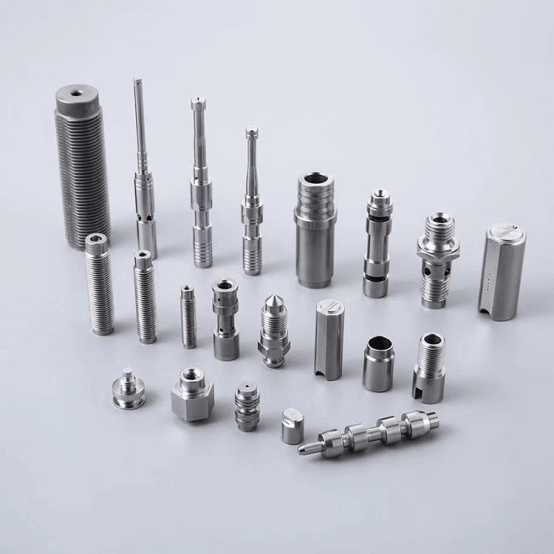
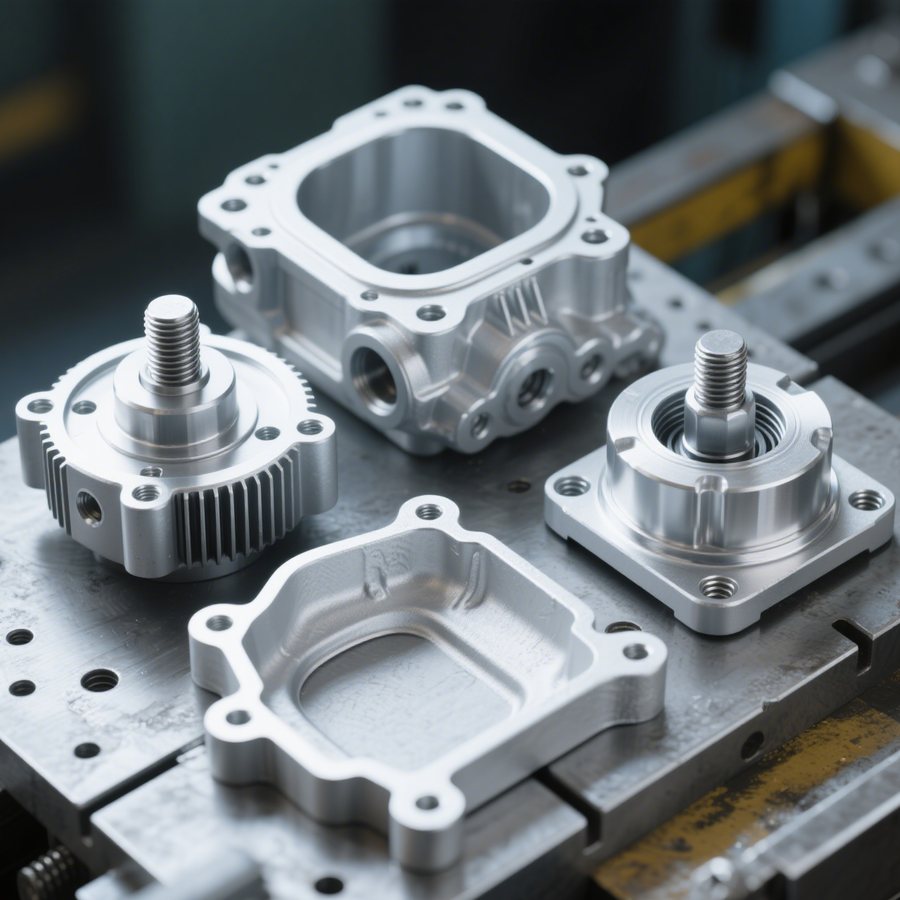
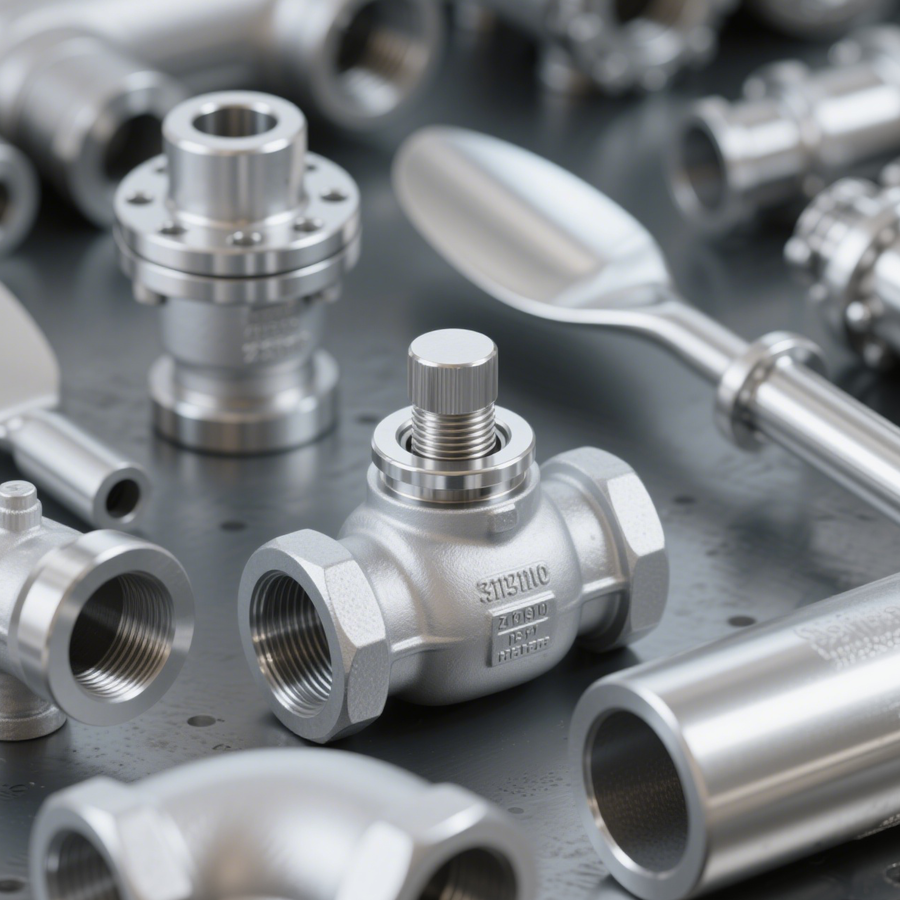
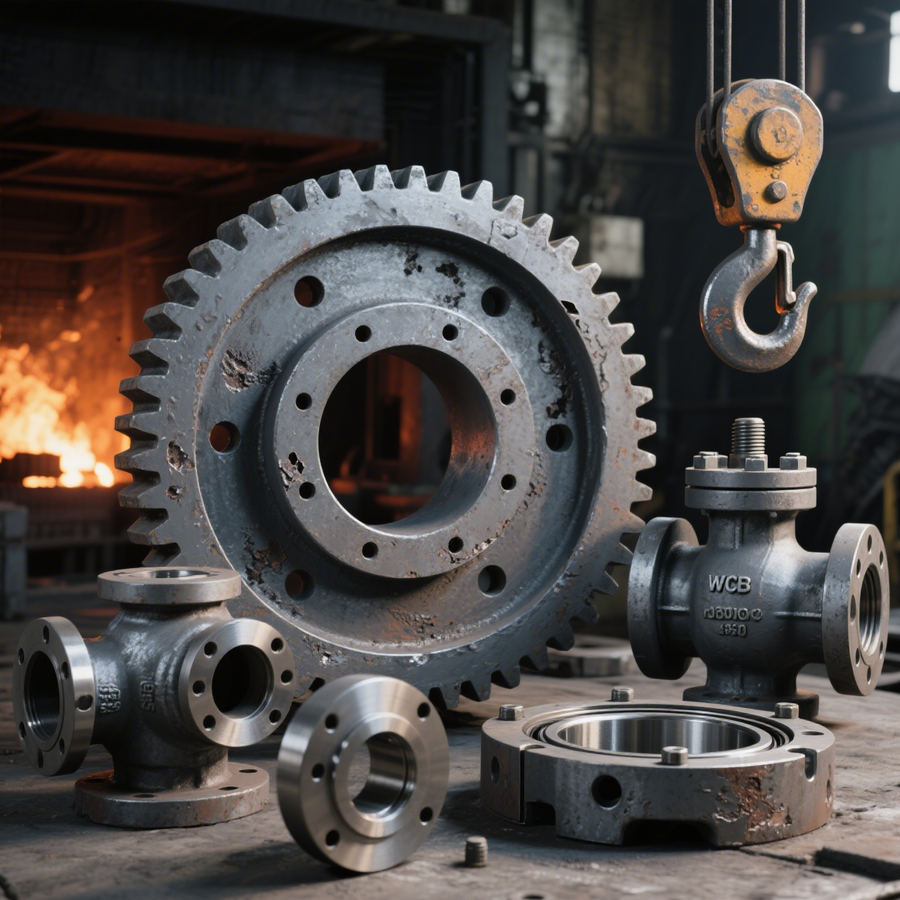
Casting services represent a comprehensive suite of manufacturing solutions designed to transform raw materials into precisely engineered components through various metal forming processes. These specialized services encompass investment casting, sand casting, die casting, and lost-wax casting techniques, each tailored to meet specific production requirements across diverse industries. Modern casting services utilize advanced computer-aided design systems, sophisticated molding technologies, and precision quality control measures to deliver components that meet exacting specifications. The technological foundation of contemporary casting services relies on state-of-the-art furnace systems capable of achieving temperatures exceeding 3000 degrees Fahrenheit, enabling the processing of various metals including aluminum, steel, brass, bronze, and specialized alloys. Advanced pattern-making technologies, including 3D printing capabilities, allow for rapid prototyping and complex geometrical designs that were previously impossible to achieve through traditional manufacturing methods. Quality assurance protocols integrated within casting services include non-destructive testing methods such as X-ray inspection, dimensional verification systems, and metallurgical analysis to ensure structural integrity and performance standards. Applications for casting services span numerous sectors including automotive manufacturing, aerospace engineering, industrial machinery production, architectural hardware creation, and artistic sculpture development. The versatility of casting services makes them particularly valuable for producing components with intricate internal passages, complex external geometries, and specific material properties that cannot be economically achieved through other manufacturing processes. Environmental considerations have become increasingly important in modern casting services, with many facilities implementing recycling programs for metal waste, energy-efficient furnace operations, and emission control systems to minimize environmental impact while maintaining production efficiency.
New Products

Casting services offer exceptional cost-effectiveness for both small-scale prototyping and large-volume production runs, making them accessible to startups and established manufacturers alike. The ability to produce complex shapes in a single manufacturing step eliminates the need for multiple machining operations, significantly reducing production time and associated labor costs. This streamlined approach translates directly into lower per-unit costs, especially beneficial for intricate components that would require extensive machining if produced through alternative methods. Casting services provide remarkable design flexibility, allowing engineers to create components with internal cavities, undercuts, and intricate surface details that are challenging or impossible to achieve through other manufacturing processes. This design freedom enables the creation of lightweight structures with optimized material distribution, resulting in improved performance characteristics and reduced material consumption. The process accommodates a wide range of materials, from common aluminum and steel alloys to exotic metals and specialized composites, giving designers unprecedented material selection options. Quality consistency represents another significant advantage of professional casting services, as established facilities employ rigorous process controls and advanced monitoring systems to ensure dimensional accuracy and material properties remain consistent across production batches. This reliability reduces the need for extensive quality inspection and rework, leading to faster delivery times and improved customer satisfaction. Casting services excel in producing components with superior surface finishes and dimensional tolerances, often eliminating secondary finishing operations. The process naturally creates smooth surfaces and can achieve tolerances within thousandths of an inch when properly controlled. Scalability is a key benefit, as casting services can efficiently transition from prototype quantities to high-volume production without requiring significant tooling changes or process modifications. This flexibility allows businesses to respond quickly to market demands and scale production up or down based on actual requirements. The durability of cast components often exceeds that of assembled alternatives, as the monolithic structure eliminates potential failure points associated with joints, welds, or fasteners, resulting in longer service life and reduced maintenance requirements.

Tips And Tricks

The cleaning of precision components is crucial to ensuring their smoothness and functionality.

29

Nov

The cleaning of precision components is crucial to ensuring their smoothness and functionality.

View More
Methods to Improve the Efficiency of Precision Component Processing

29

Nov

Methods to Improve the Efficiency of Precision Component Processing

View More
Kindness Warms the Heart, Responsibility in Action

29

Nov

Kindness Warms the Heart, Responsibility in Action

View More
Design Knowledge for Shaft Pin Components

29

Nov

Design Knowledge for Shaft Pin Components

View More

Get a Free Quote

Our representative will contact you soon.
Email
Name
Company Name
WhatsApp
Message
0/1000

casting services

Advanced Material Processing Capabilities

Advanced Material Processing Capabilities

Modern casting services leverage cutting-edge metallurgical expertise to process an extensive range of materials with precision and consistency that sets industry standards. The sophisticated furnace systems employed in professional casting facilities can accommodate everything from standard aluminum and steel alloys to exotic materials like titanium, inconel, and specialized high-temperature alloys used in aerospace and defense applications. This material versatility stems from precisely controlled heating environments that can achieve and maintain temperatures exceeding 3000 degrees Fahrenheit while ensuring uniform heat distribution throughout the molten metal. The casting services utilize advanced alloying techniques that allow for custom material compositions tailored to specific application requirements, whether that involves enhanced corrosion resistance, improved strength-to-weight ratios, or specialized magnetic properties. Sophisticated atmosphere control systems prevent oxidation and contamination during the casting process, ensuring that the final components maintain their intended material properties and surface quality. The integration of real-time monitoring systems tracks critical parameters such as temperature, pressure, and cooling rates throughout the casting process, enabling immediate adjustments to maintain optimal conditions and prevent defects. Quality control protocols include comprehensive metallurgical analysis using spectrometry and microscopic examination to verify chemical composition and grain structure, ensuring that every cast component meets or exceeds specified material standards. The ability to process recycled materials effectively makes these casting services environmentally responsible while maintaining quality standards, as advanced refining processes can remove impurities and restore material properties to virgin specifications. This material processing expertise extends to post-casting heat treatment services, including annealing, tempering, and stress relief procedures that optimize mechanical properties for specific applications, providing customers with components that are ready for immediate use or minimal additional processing.
Precision Engineering and Dimensional Accuracy

Precision Engineering and Dimensional Accuracy

Professional casting services distinguish themselves through exceptional precision engineering capabilities that consistently deliver components with tight dimensional tolerances and superior geometric accuracy. The foundation of this precision lies in advanced pattern-making technologies that utilize computer-controlled machining centers and 3D printing systems to create master patterns with accuracies measured in thousandths of an inch. These precision patterns serve as the foundation for mold creation, ensuring that dimensional accuracy is maintained throughout the entire casting process. Sophisticated molding techniques, including investment casting and precision sand casting, enable the production of components with complex internal geometries, thin-walled sections, and intricate surface details that would be impossible or prohibitively expensive to achieve through traditional machining methods. The casting services employ state-of-the-art coordinate measuring machines and laser scanning systems to verify dimensional accuracy at every stage of production, from pattern verification through final component inspection. Advanced simulation software allows engineers to predict and compensate for shrinkage, distortion, and other variables that could affect dimensional accuracy, resulting in components that consistently meet specified tolerances without requiring extensive secondary machining. The integration of statistical process control methods ensures that dimensional variations remain within acceptable limits throughout production runs, providing customers with the confidence that comes from consistent, repeatable results. Specialized tooling and fixturing systems maintain component orientation and prevent distortion during cooling, contributing to the exceptional dimensional stability of cast components. The precision capabilities extend to surface finish control, with casting services able to achieve surface roughness values comparable to machined surfaces in many applications, reducing or eliminating the need for additional finishing operations. Quality documentation systems provide comprehensive dimensional reports and certificates of conformance, giving customers complete traceability and verification of component specifications. This commitment to precision engineering enables casting services to support critical applications in aerospace, medical device manufacturing, and other industries where dimensional accuracy is paramount to performance and safety.
Rapid Prototyping and Time-to-Market Acceleration

Rapid Prototyping and Time-to-Market Acceleration

Contemporary casting services excel in rapid prototyping capabilities that dramatically reduce product development timelines and accelerate time-to-market for new products across multiple industries. The integration of advanced 3D printing technologies for pattern creation allows casting services to produce functional prototypes within days rather than the weeks or months typically required for traditional pattern-making methods. This rapid pattern creation capability enables engineers to quickly iterate through design variations, test fit and function, and optimize component performance before committing to full-scale production tooling. The flexibility of modern casting processes allows for design modifications between prototype batches without significant time delays or cost penalties, supporting agile development methodologies and reducing overall project risk. Casting services utilize rapid solidification techniques and accelerated cooling systems that can produce prototype components with mechanical properties closely matching those of production parts, providing meaningful data for design validation and performance testing. The ability to produce small quantities of prototypes economically makes casting services particularly valuable for market testing and customer validation activities, allowing companies to gather real-world feedback before investing in high-volume production capabilities. Advanced project management systems integrated within casting services provide real-time visibility into production schedules, quality checkpoints, and delivery timelines, enabling customers to coordinate prototype delivery with other development activities and maintain aggressive project schedules. The casting services offer comprehensive design support throughout the prototyping phase, including finite element analysis, flow simulation, and thermal modeling to identify and resolve potential issues before they impact production schedules or component performance. Collaborative engineering capabilities allow casting services to work directly with customer design teams, providing manufacturing expertise that can optimize designs for castability while maintaining performance requirements and reducing production costs. The seamless transition from prototyping to production eliminates the typical delays associated with process transfer and tooling modifications, as the same equipment, materials, and quality systems used for prototyping continue into full-scale manufacturing, ensuring consistency and reducing project risk while maintaining aggressive delivery schedules.