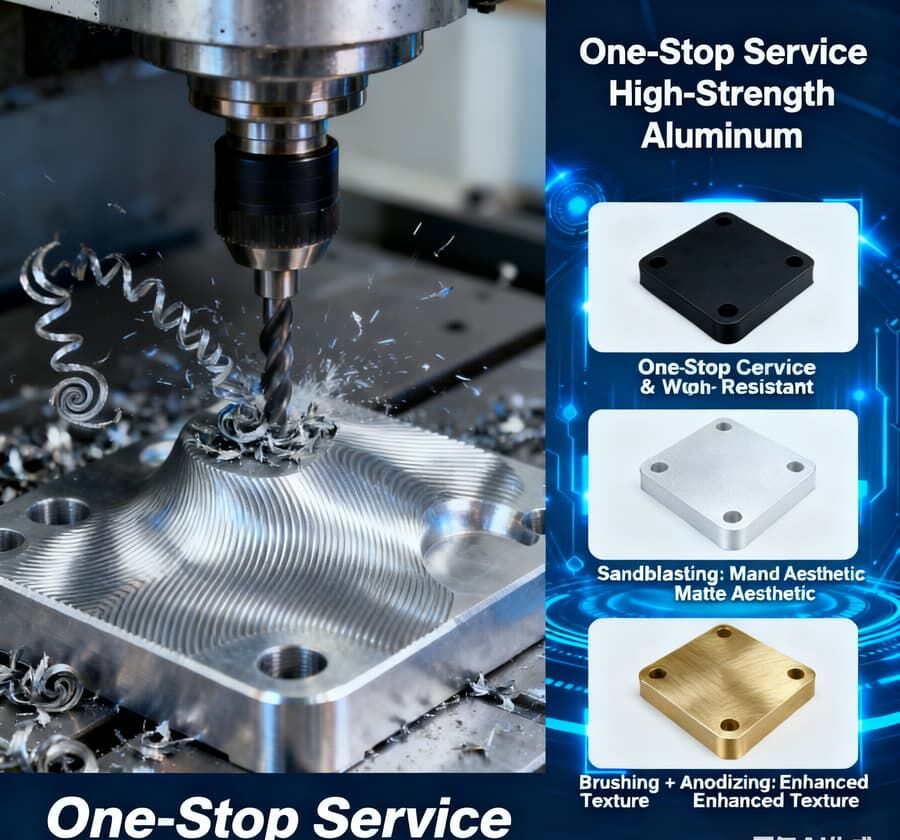
Aluminum Extrusion Prototyping: Advanced Manufacturing Solutions for Custom Profiles

All Categories

aluminum extrusion prototyping

Aluminum extrusion prototyping represents a cutting-edge manufacturing approach that transforms raw aluminum billets into precisely shaped profiles through specialized dies and heated processes. This innovative technique serves as the foundation for creating custom aluminum components across diverse industries, from automotive and aerospace to construction and electronics. The aluminum extrusion prototyping process begins with heating aluminum billets to optimal temperatures, typically between 700-900 degrees Fahrenheit, before forcing the material through custom-designed dies that shape the aluminum into desired cross-sectional profiles. Modern aluminum extrusion prototyping facilities utilize advanced hydraulic presses capable of generating tremendous force, ensuring consistent material flow and dimensional accuracy throughout the production cycle. The technological features of aluminum extrusion prototyping include computer-controlled temperature management systems, precision die design capabilities, and quality assurance protocols that monitor dimensional tolerances in real-time. Advanced aluminum extrusion prototyping operations incorporate CAD software integration, allowing engineers to simulate material flow patterns and optimize die designs before physical production begins. The process accommodates both solid and hollow profiles, enabling manufacturers to create complex geometries with internal chambers, multiple cavities, and intricate surface features. Temperature control remains critical in aluminum extrusion prototyping, as proper heat management ensures optimal material properties and surface finish quality. Modern facilities employ sophisticated cooling systems that gradually reduce extruded profile temperatures while maintaining structural integrity. Applications for aluminum extrusion prototyping span numerous sectors, including window and door manufacturing, heat sink production, structural framing systems, and decorative architectural elements. The versatility of aluminum extrusion prototyping makes it particularly valuable for creating lightweight yet strong components that meet specific dimensional requirements while maintaining excellent corrosion resistance and thermal conductivity properties essential for various industrial applications.

New Products

Aluminum extrusion prototyping delivers exceptional cost-effectiveness compared to traditional machining methods, particularly when producing complex profiles that would require extensive cutting, drilling, and shaping operations. This manufacturing approach eliminates waste material typically associated with subtractive manufacturing processes, as the aluminum flows directly into the desired shape without generating excess scrap. Companies utilizing aluminum extrusion prototyping experience significantly reduced material costs and shorter production timelines, especially for high-volume orders where the initial die investment pays dividends through repeated use. The speed advantage of aluminum extrusion prototyping becomes apparent when comparing production rates to alternative manufacturing methods, with modern equipment capable of producing hundreds of linear feet per hour depending on profile complexity. Quality consistency represents another major benefit, as aluminum extrusion prototyping maintains uniform dimensional tolerances across entire production runs, eliminating variations common in machined components. The process provides exceptional surface finish quality straight from the die, often requiring minimal secondary operations like grinding or polishing that add time and expense to traditional manufacturing approaches. Design flexibility stands out as a key strength of aluminum extrusion prototyping, enabling engineers to incorporate features such as snap-fit connections, mounting channels, and decorative elements directly into the extruded profile. This integration capability reduces assembly requirements and eliminates the need for separate fasteners or joining components in many applications. Aluminum extrusion prototyping supports rapid iteration and modification through die adjustments, allowing manufacturers to refine designs based on testing feedback without completely restarting the production setup. The environmental benefits of aluminum extrusion prototyping include reduced energy consumption compared to machining operations and the inherent recyclability of aluminum materials, supporting sustainable manufacturing practices. Material properties remain consistent throughout aluminum extrusion prototyping processes, ensuring predictable strength characteristics, thermal conductivity, and corrosion resistance across all produced components. The scalability of aluminum extrusion prototyping accommodates both small prototype runs and large-scale production volumes, making it suitable for companies at various stages of product development and commercialization.

Latest News

The cleaning of precision components is crucial to ensuring their smoothness and functionality.

29

Nov

The cleaning of precision components is crucial to ensuring their smoothness and functionality.

View More
Methods to Improve the Efficiency of Precision Component Processing

29

Nov

Methods to Improve the Efficiency of Precision Component Processing

View More
Kindness Warms the Heart, Responsibility in Action

29

Nov

Kindness Warms the Heart, Responsibility in Action

View More
Design Knowledge for Shaft Pin Components

29

Nov

Design Knowledge for Shaft Pin Components

View More

Get a Free Quote

Our representative will contact you soon.
Email
Name
Company Name
WhatsApp
Message
0/1000

aluminum extrusion prototyping

Unmatched Design Versatility and Complex Geometry Capabilities

Unmatched Design Versatility and Complex Geometry Capabilities

Aluminum extrusion prototyping excels in creating intricate cross-sectional profiles that would be impossible or prohibitively expensive to manufacture using traditional machining methods. This remarkable capability stems from the fundamental nature of the extrusion process, where heated aluminum flows through custom-designed dies that can incorporate complex internal geometries, multiple chambers, and sophisticated external features in a single operation. The design freedom offered by aluminum extrusion prototyping enables engineers to consolidate multiple components into single extruded profiles, eliminating assembly steps and reducing potential failure points in finished products. Modern aluminum extrusion prototyping facilities work closely with design teams to optimize profile geometries for specific applications, incorporating features such as integral heat sinks, wire management channels, mounting grooves, and decorative elements that enhance both functionality and aesthetic appeal. The precision achievable through aluminum extrusion prototyping allows for tight tolerances on critical dimensions while maintaining cost-effectiveness across production volumes. Advanced die design software enables aluminum extrusion prototyping specialists to simulate material flow patterns, identify potential defects, and optimize die geometries before physical production begins, reducing development time and ensuring successful outcomes. The ability to create hollow profiles with complex internal structures represents a particular strength of aluminum extrusion prototyping, enabling applications in industries requiring lightweight yet strong components such as aerospace, automotive, and architectural systems. Wall thickness variations, internal reinforcement ribs, and multiple cavities can be incorporated into single extruded profiles, providing structural advantages that surpass welded or assembled alternatives. Aluminum extrusion prototyping also accommodates secondary operations such as precision machining, drilling, and surface treatments on the finished profiles, allowing for additional customization without compromising the inherent benefits of the extrusion process. The integration of advanced quality control systems ensures that complex geometries maintain dimensional accuracy throughout production runs, providing confidence in component fit and function across various assembly applications.
Superior Material Properties and Performance Characteristics

Superior Material Properties and Performance Characteristics

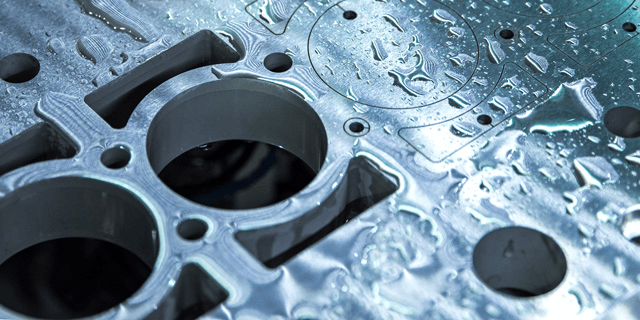
Aluminum extrusion prototyping produces components with exceptional material properties that result from the controlled deformation and grain structure refinement occurring during the extrusion process. The high-pressure, high-temperature environment of aluminum extrusion prototyping creates a homogeneous material structure with improved mechanical properties compared to cast or fabricated aluminum components. This enhancement occurs as the extrusion process breaks down the original grain structure and creates a refined, directionally oriented crystalline arrangement that increases strength and durability. The aluminum extrusion prototyping process enables precise control over material composition through alloy selection, allowing manufacturers to optimize specific properties such as corrosion resistance, thermal conductivity, electrical conductivity, or strength-to-weight ratios for particular applications. Heat treatment capabilities integrated with aluminum extrusion prototyping operations provide additional opportunities to enhance material properties through controlled cooling rates and aging processes that further improve mechanical characteristics. The surface integrity achieved through aluminum extrusion prototyping surpasses many alternative manufacturing methods, as the material flows smoothly through the die without cutting forces that can introduce stress concentrations or surface defects. This superior surface quality reduces the need for secondary finishing operations and provides excellent bases for anodizing, powder coating, or other surface treatments that enhance appearance and protection. Aluminum extrusion prototyping also ensures consistent material properties throughout the cross-section of extruded profiles, eliminating the variations in density, porosity, or composition that can occur in cast components. The work hardening effect of aluminum extrusion prototyping increases the yield strength and tensile strength of the finished profiles compared to the original billet material, providing enhanced structural performance without additional processing steps. Thermal characteristics of extruded aluminum profiles make them ideal for heat dissipation applications, with aluminum extrusion prototyping enabling the creation of complex fin arrangements and internal channels that optimize thermal transfer efficiency. The dimensional stability of aluminum extrusion prototyping results ensures that components maintain their shape and tolerances under varying temperature and load conditions, critical for precision applications in automotive, aerospace, and electronic industries.
Exceptional Production Efficiency and Economic Value

Exceptional Production Efficiency and Economic Value

Aluminum extrusion prototyping delivers unparalleled production efficiency through its ability to create complex, near-net-shape components in a single continuous operation, dramatically reducing manufacturing time and associated costs compared to traditional fabrication methods. The continuous nature of aluminum extrusion prototyping enables high-volume production rates that can exceed several hundred linear feet per hour, depending on profile complexity and size, making it highly suitable for both prototype development and full-scale manufacturing. This efficiency advantage becomes particularly pronounced when producing long, straight components where aluminum extrusion prototyping eliminates the multiple setups and operations required for machining or forming equivalent parts from raw stock. The economic benefits of aluminum extrusion prototyping extend beyond direct manufacturing costs to include reduced inventory requirements, as the process can produce components to exact lengths without material waste, and simplified supply chain management through single-source component supply. Setup flexibility in aluminum extrusion prototyping operations allows for quick changeovers between different profiles using the same base equipment, enabling manufacturers to respond rapidly to changing market demands or customer requirements without significant capital investment. The tooling costs associated with aluminum extrusion prototyping, while requiring initial investment in custom dies, prove economical across moderate to high production volumes due to the exceptional die life and consistency of output quality. Advanced aluminum extrusion prototyping facilities utilize automated handling systems, in-line quality inspection, and integrated cutting operations that further enhance productivity while maintaining stringent quality standards throughout production runs. The energy efficiency of aluminum extrusion prototyping compares favorably to alternative manufacturing processes, as the heat input required for billet heating can be optimized through advanced furnace controls and heat recovery systems that minimize overall energy consumption per unit of production. Labor efficiency benefits from aluminum extrusion prototyping include reduced handling requirements, simplified quality control procedures, and minimal secondary operations needed to achieve finished component specifications. The scalability of aluminum extrusion prototyping operations allows manufacturers to adjust production volumes efficiently, accommodating everything from small prototype batches to large-scale production runs using the same basic equipment and processes. Quality consistency achieved through aluminum extrusion prototyping reduces inspection requirements, minimizes rework, and ensures reliable performance in end-use applications, contributing to overall manufacturing efficiency and customer satisfaction.